
A stablecoin is a crypto token designed to track a reference value, often a fiat currency such as the US dollar. The design, reserve model, issuer, network, redemption path, and market liquidity determine what that goal means in practice. Start with the crypto hub before treating a stablecoin as cash.
The unit and the wrapper
USDC on one network is not the same on-chain object as USDC on another. Record the exact mint, network, token program, decimals, issuer, and route. Wallet labels can be helpful, but an identifier is the authoritative starting point.
Why people use stablecoins
Stablecoins can move value between wallets, exchanges, payment products, and smart contracts without using a traditional bank rail for every step. Jupiter Global describes stablecoins as part of its spending-account design, while Jupiter Exchange focuses on Solana trading routes.
Risks to check
Review issuer disclosures, reserve and redemption terms, smart-contract or bridge exposure, freeze powers, depeg history, liquidity, fees, and counterparty dependencies. A stable target can trade above or below it, and a token can be frozen or unsupported by a venue.
Stablecoin versus bank transfer
A bank transfer is a regulated account movement governed by a bank and local payment rules. A stablecoin transfer is a blockchain transaction governed by keys, network fees, finality, and token rules. Compare the full journey in stablecoin versus bank transfer, including mistakes and dispute paths.
Research checklist
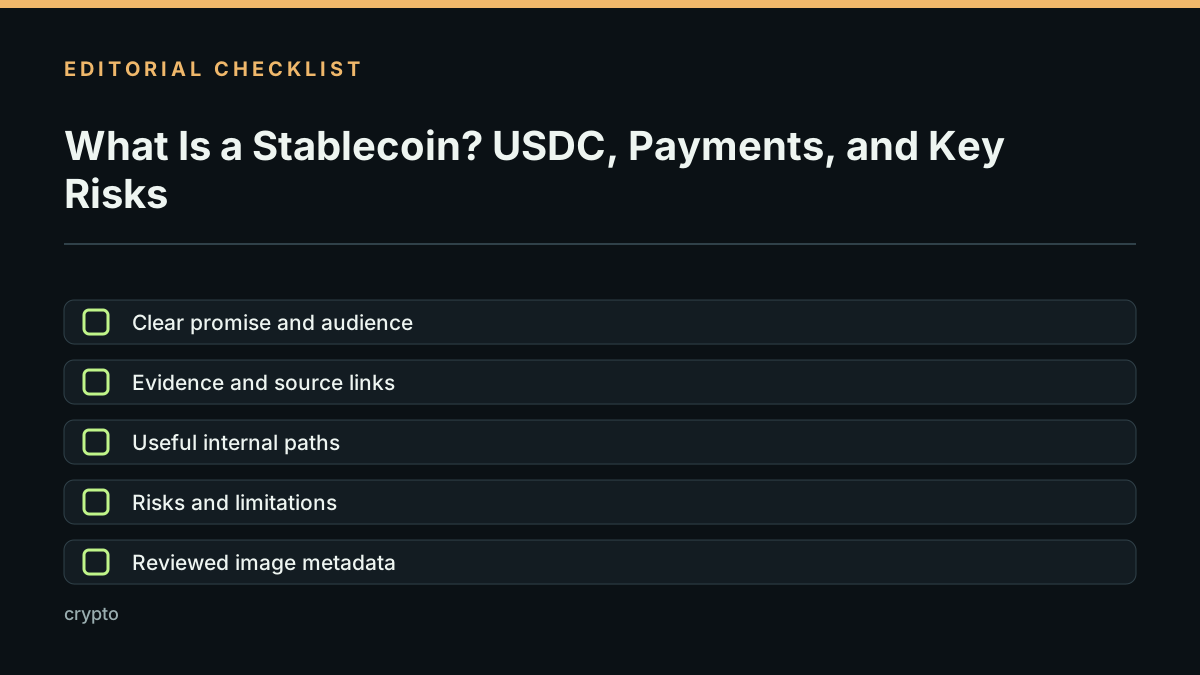
Record the exact asset and network, source of the price, redemption route, transfer fee, confirmation model, and who can reverse or freeze a transaction. Keep a small test amount until the destination confirms receipt.
Limits and responsible use
Stablecoins are not guaranteed deposits and a price target is not a promise of liquidity or redemption. This educational guide is not financial, legal, or tax advice. Last reviewed 2026-09-21.