Market capitalization usually combines a token price with a supply measure. Liquidity is the market’s capacity to absorb trades without large price impact. They answer different questions: market cap is a valuation estimate; liquidity concerns execution. Start with crypto basics and compare it with memecoin liquidity.
A practical way to use this guide
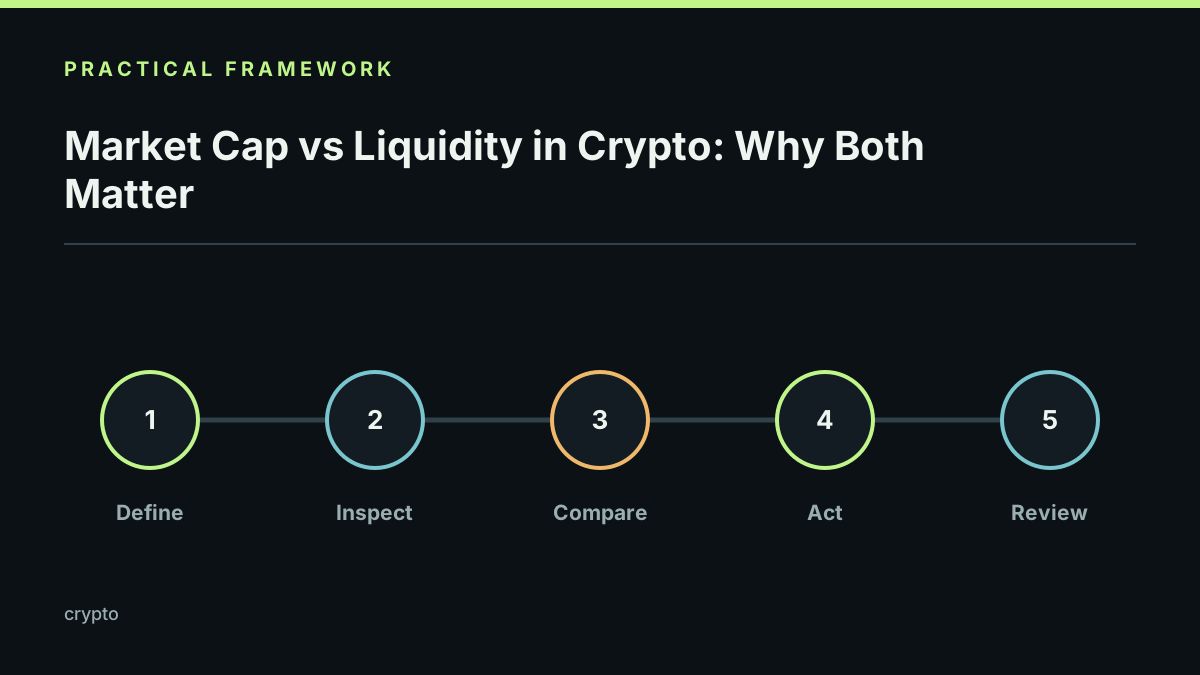
Record whether supply means circulating, total, or fully diluted and record the timestamp. Inspect pool depth, venue, volume, spread, holder concentration, and expected price impact for a hypothetical order. A large market cap with shallow liquidity can be difficult to trade.
Limits and responsible use
Providers can disagree because they use different supply, price, and venue coverage. A snapshot becomes stale quickly and cannot prove solvency, ownership, or demand. Label assumptions and never make a recommendation from one metric. Last reviewed 2026-09-14.
Quick review checklist
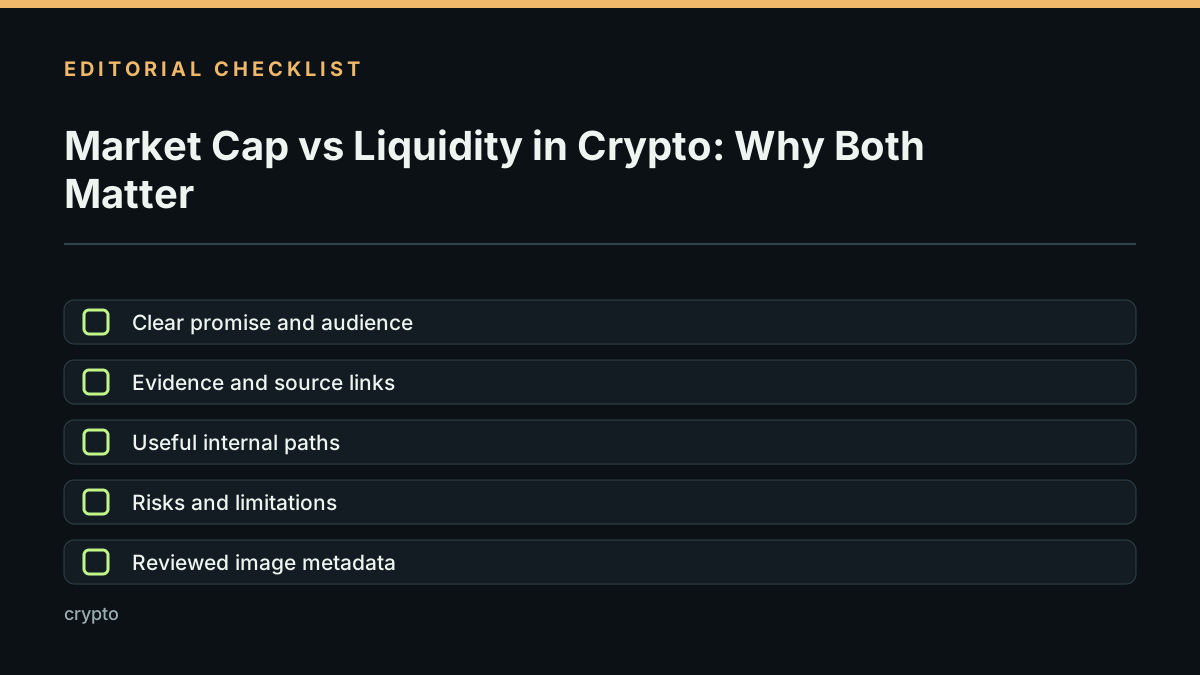
Before you rely on any crypto explanation, confirm the exact network, identifier, timestamp, data source, and intended audience. Follow the crypto glossary when a term is unfamiliar, and return to the crypto hub for the wider learning path. If the article describes a launch, pair it with the token launch guide and write down what the evidence does not establish. Prefer a small, reversible test over an irreversible action, keep private credentials out of forms and chats, and record material changes so readers can see what was updated.