Many memecoin launches fail before the token is created because the brief, audience, ownership model, and support plan are unclear. A better process is to document decisions, test the user journey, and publish evidence before asking anyone to participate. Use the launch guide as the main path.
A practical way to use this guide
Common mistakes include changing supply assumptions late, forgetting authority controls, publishing an uncopyable mint, treating a logo as a roadmap, launching without support, relying on one social account, and measuring success only by price. Replace each with versioned facts, documented permissions, canonical links, an operational runbook, and a realistic content plan.
Limits and responsible use
No process prevents volatility, technical failures, or legal uncertainty. A transparent launch can receive little attention, while a loud launch can still be unsafe. Accurate corrections are part of trust. Last reviewed 2026-09-14.
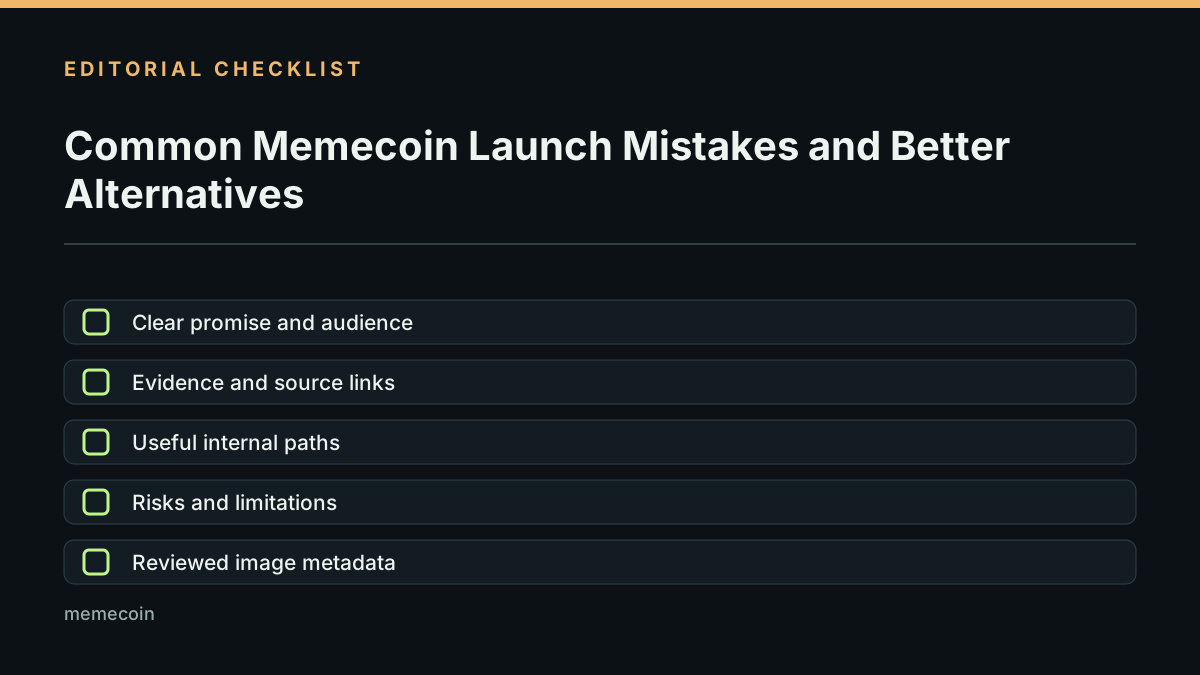
Quick review checklist
Before you rely on any crypto explanation, confirm the exact network, identifier, timestamp, data source, and intended audience. Follow the crypto glossary when a term is unfamiliar, and return to the crypto hub for the wider learning path. If the article describes a launch, pair it with the token launch guide and write down what the evidence does not establish. Prefer a small, reversible test over an irreversible action, keep private credentials out of forms and chats, and record material changes so readers can see what was updated.