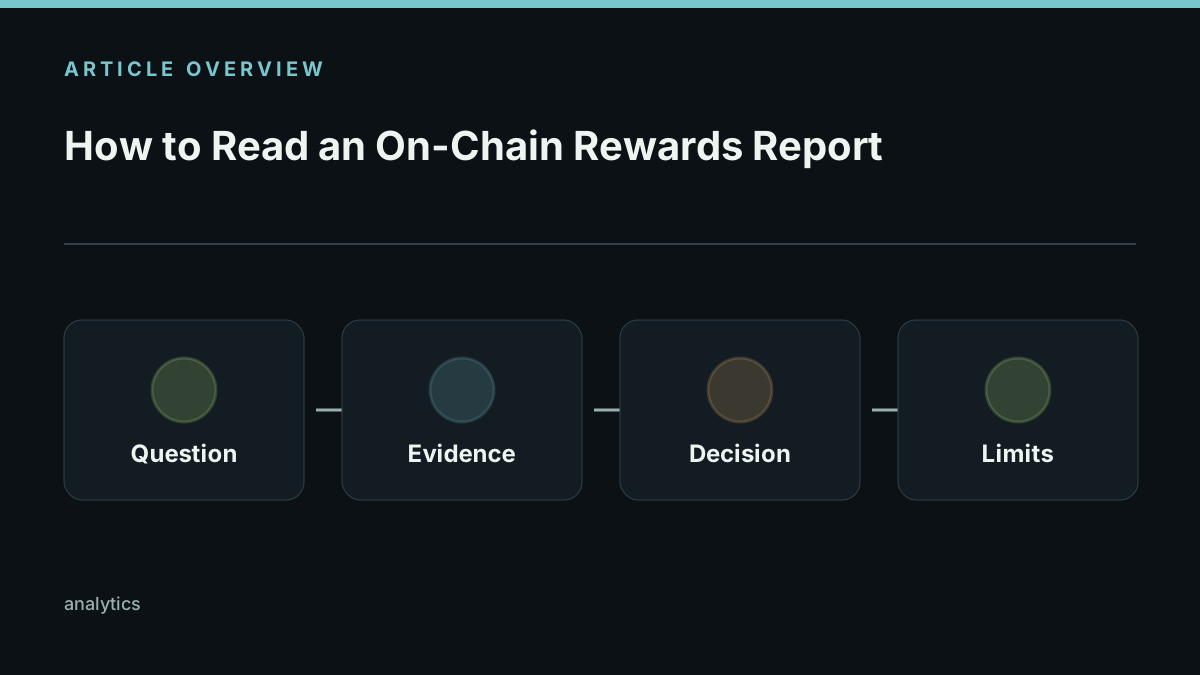
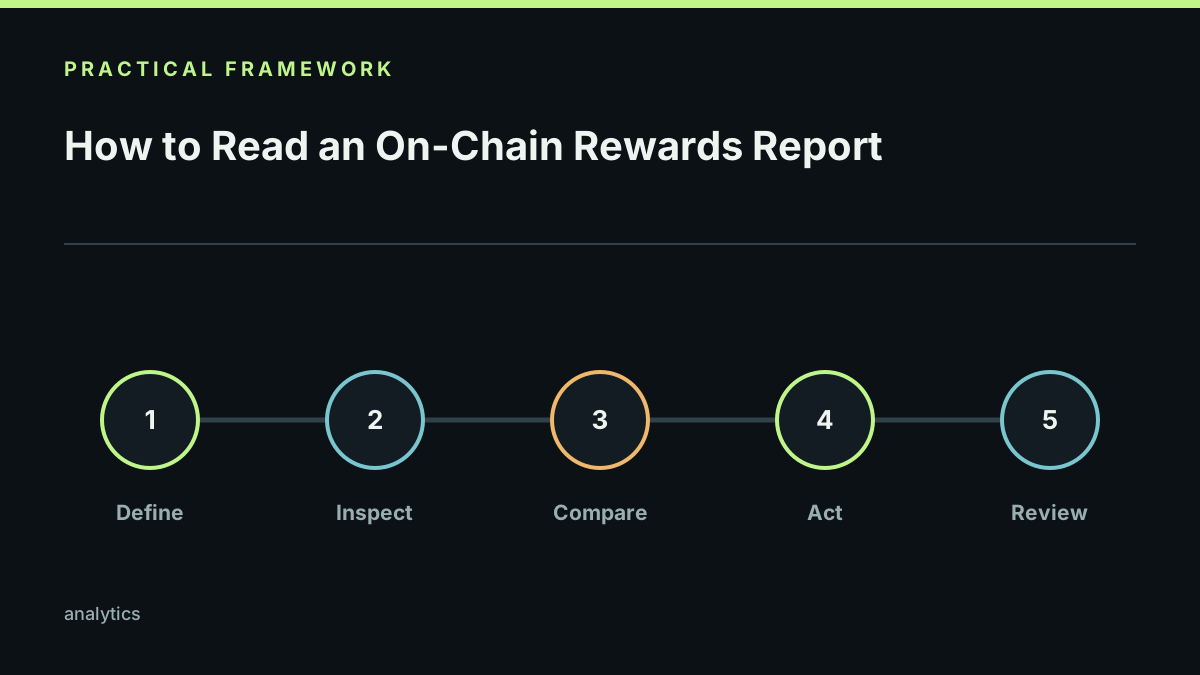
Start by checking the report scope: wallet address, time range, data providers, finality, and coverage status. A report that says “observed” is not necessarily a complete lifetime history, and a token transfer is not automatically a verified reward.
Check identity and evidence
For each important row, look for the exact mint, transaction signature, instruction path, amount, source, and any project allocation evidence. If two provider records describe one canonical receipt, they should reconcile rather than count twice. If a record is ambiguous, a conservative report should keep it outside the verified total and explain why.
Interpret valuation carefully
Token quantities and dollar estimates answer different questions. A missing or stale price should remain visible as a limitation rather than being replaced with zero or an invented quote. Liquidity, price impact, and market conditions can change independently of the recorded token amount.
Read why on-chain data can be incomplete and the on-chain rewards guide. StonkScope is read-only and does not guarantee completeness, valuation, or future rewards.
The most useful reports make uncertainty visible next to the number it qualifies. Look for warnings about pagination, provider outages, stale caches, unresolved project attribution, unsupported assets, and unpriced balances. A clear limitation is more useful than a precise-looking total that cannot be reproduced.